The green revolution
Client
Westep
Sector
PET Packaging
Year
2025

A box with a proper job

_______
Industrial frying oil is not exactly a delicate business. It is heavy, slippery, moved fast, poured often and rarely treated with ceremony. For Cargill, WeStep asked Emo design to rethink the packaging system around a clear ambition: reduce plastic without making the container harder to use. The original pack used a polypropylene bottle with an integrated handle, then added a cardboard box for stacking, shipping and protection. Sensible enough. Until the move to PET changed the rules. PET brought a clear material advantage, but one small inconvenience: no built-in handle. Adding a separate plastic grip would have rather missed the point. So we redesigned the system around a better question. Could the cardboard do the heavy lifting?
The cardboard got promoted

_______
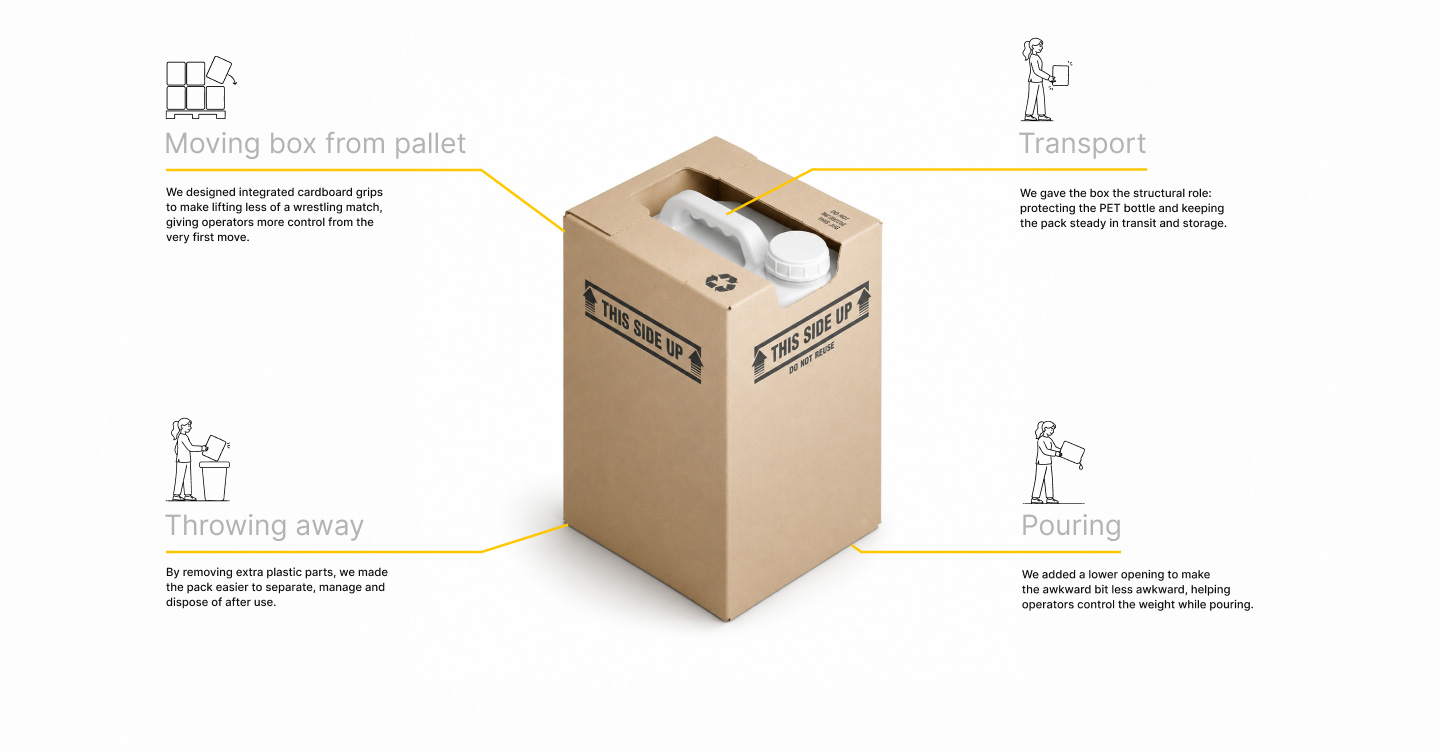
Instead of adding another plastic component, we redesigned the box to take on a proper structural role. What had been secondary packaging became the core of the user experience: strong enough to protect the PET bottle, stable enough for transport and stacking, and clever enough to be lifted, carried and poured without a separate handle.

Mapping the journey

_______
We mapped the full journey of the pack — pallet, transport, storage, lifting, pouring, disposal — and designed the cardboard around the moments where things usually get awkward. The result is a recycled cardboard structure with reinforced folds, integrated handholds and a lower opening that makes pouring easier in professional kitchens.

Less plastic. Fewer parts. Better manners.

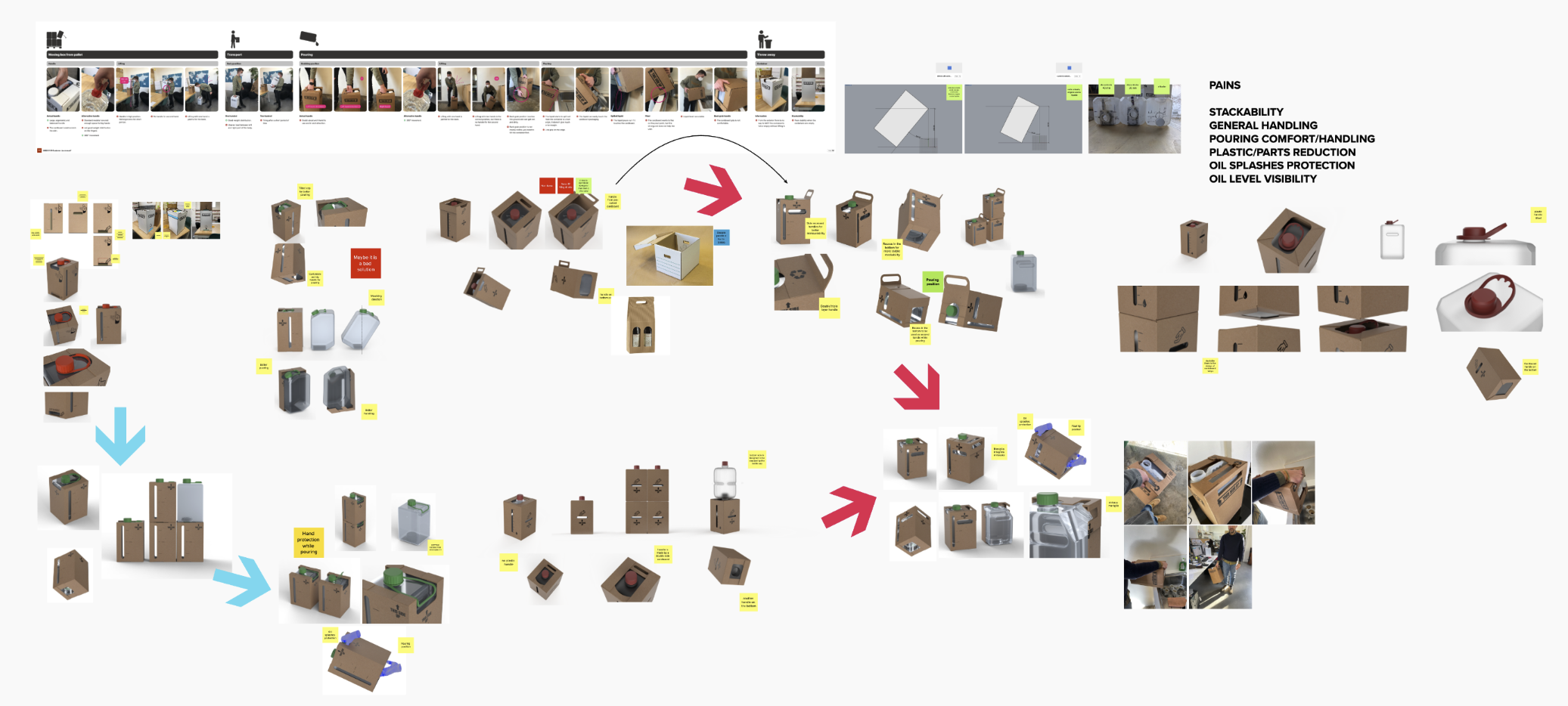
Fold, test, swear quietly, repeat

_______
Getting there meant prototypes. Many of them.

Together with WeStep and the cardboard supplier, we developed and tested folds, grips, openings and structural details until the pack could take responsibility for the bottle inside it. The production version uses folds and gluing; the next step is already looking further, with interlocking cardboard solutions designed to remove glue from the system altogether. Because once you start asking cardboard to behave intelligently, it tends to get ambitious.
In the end, the cardboard did what cardboard does. Just much better: less plastic, a simpler system and 30 million units manufactured.
The project in
numbers:
-25%
Bottle weight
+8,8%
Paper weight
-19,1%
Total packaging weight